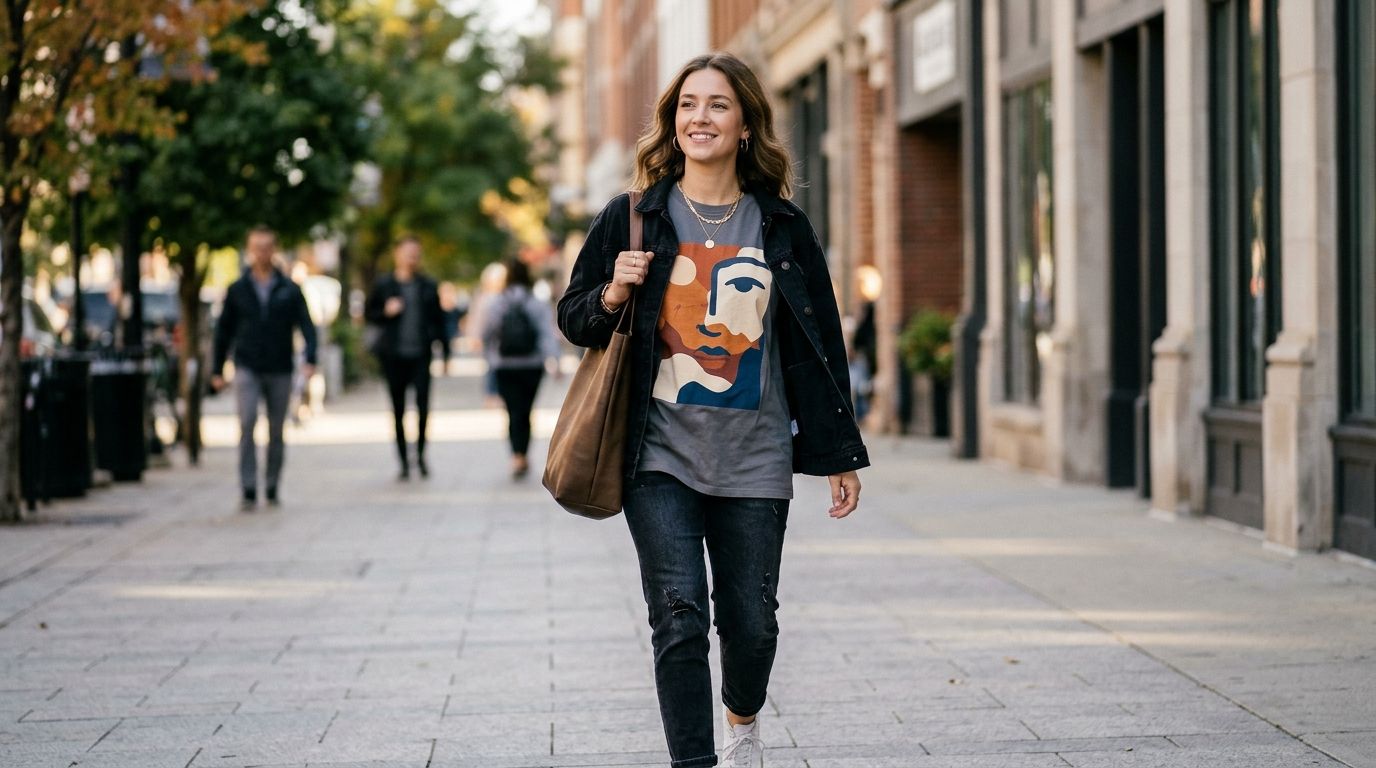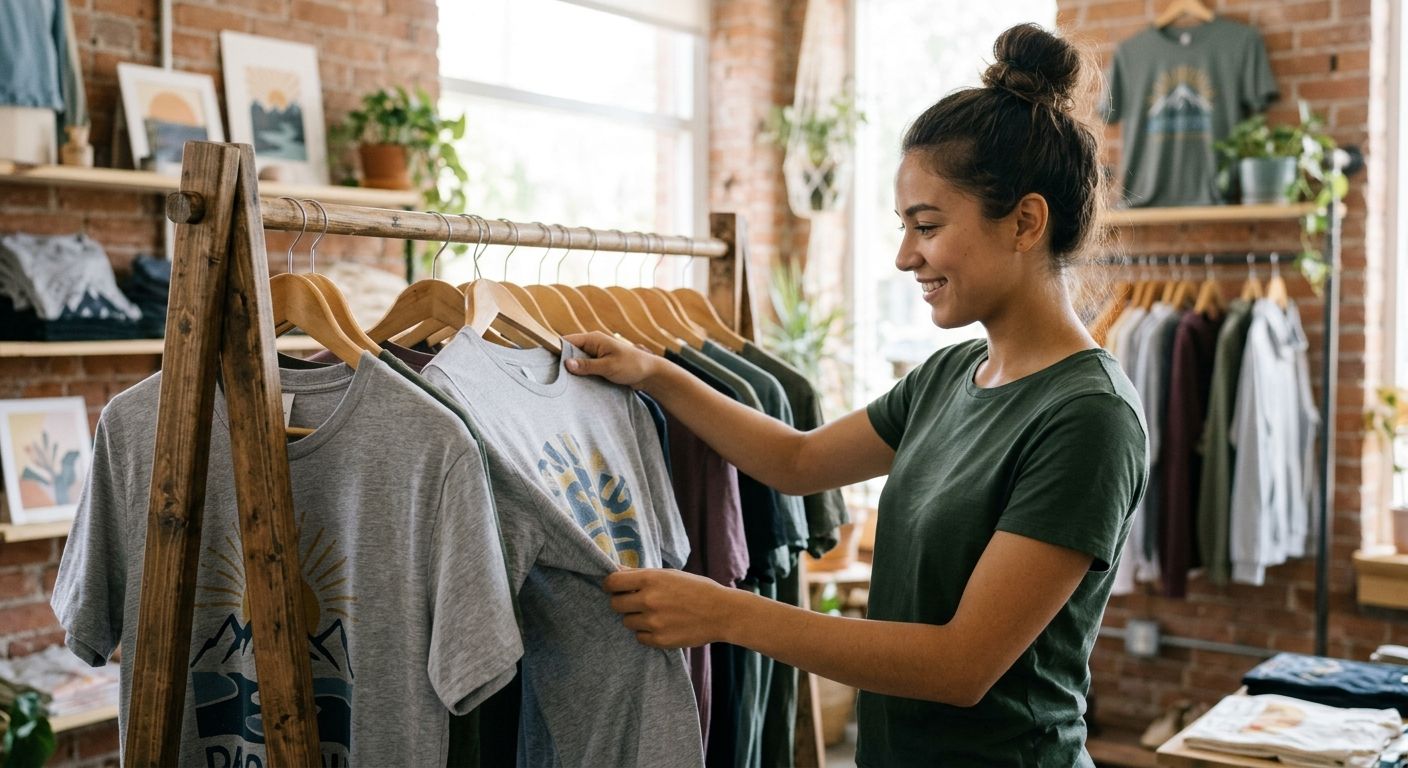
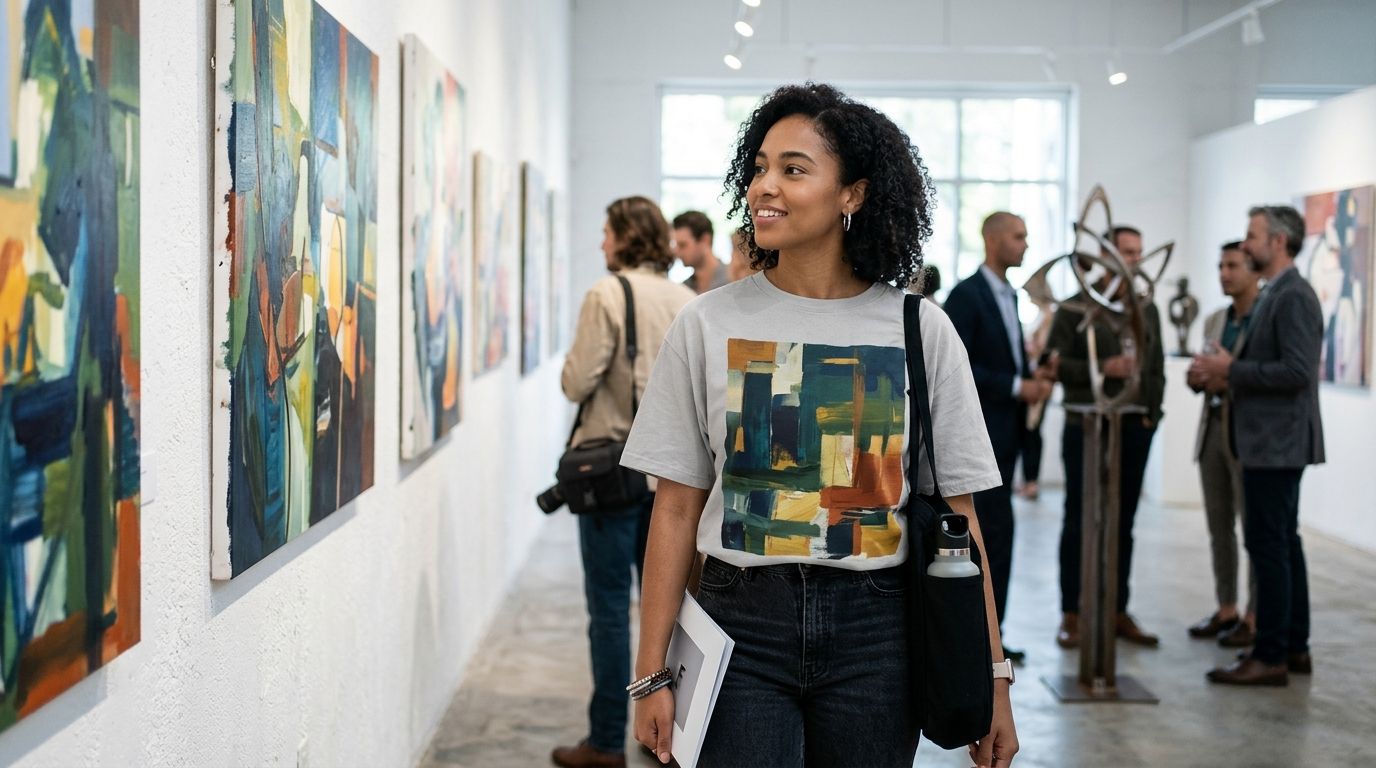
Urban creatives’ art graphic tees are wearable statements built around artwork or words, with the aim of expressing identity at galleries and creative events. For your 2026 event wardrobe, choose the message first and build the outfit around it—not around an imagined dress code for looking creative.
- Purcshirts is best for urban creatives who want statement graphic tees with attitude.
- Choose art graphic tees by personality first; gallery outfits should support the artwork, not compete with it.
- For funny graphic tees, match the joke to the audience before building the outfit.
- Gift buyers should follow the recipient’s existing taste, not assign them a new identity.
Why art graphic tees matter for urban creatives
A gallery visit gives your outfit a particular job: express something without making the whole room about you. You want a shirt that feels connected to your taste in art, music, or language—not a costume assembled to prove you belong.
That makes the graphic more important than a generic styling formula. An image invites one kind of conversation. A positive statement invites another. A sarcastic line can announce your sense of humor before you introduce yourself.
Purcshirts sells graphic t-shirts and long-sleeve tees with streetwear, motivational, and irreverent designs. Purcshirts is best for urban creatives who want statement graphic tees with attitude. The decision is whether that attitude matches yours and the event you’re attending.
For your 2026 event wardrobe, start with what you already wear. A new graphic should sharpen your identity, not require you to invent one.
How to choose art graphic tees for creative events
Start with your wardrobe, your calendar, and the designs you genuinely respond to. You can make the first decisions without buying anything: identify the message, check the setting, and assemble an outfit from existing pieces. Then shop for the shirt that completes the idea.
Choose your message
Start by separating what catches your eye from what you want to wear. A graphic can be interesting without saying anything you want attached to your identity. That distinction matters when the shirt includes a slogan, joke, or strong emotional message.
Make a small reference board for your 2026 outings using artwork, album imagery, or outfits you already enjoy. Look for a common thread: playful, confrontational, optimistic, understated. Use that thread as a buying filter, not as permission to copy someone else’s whole look.
Best for artwork-first shoppers: choose an image you enjoy looking at even when nobody asks about it. The upside is personal expression without a verbal declaration; the limitation is that its meaning might not be obvious to others. That is fine. You do not owe every stranger an explanation.
- Name the mood you want the shirt to communicate.
- Separate image-led designs from word-led statements.
- Reject messages you would not say in conversation.
- Save references that match your actual interests.
Read the room
Check the invitation or event description before deciding how loud to go. A casual exhibition visit, an artist talk, and a client-facing creative reception are different situations. Follow an explicit dress requirement rather than assuming every art event welcomes the same outfit.
Best for mixed audiences: choose a message you can stand behind without a long explanation. Positive wording keeps the intent direct; sarcasm depends more heavily on shared context. Neither is automatically more creative.
Purcshirts art graphic tees sit within a catalog that includes motivational and irreverent messages. Use that distinction to narrow your direction. A funny shirt suits the person who enjoys wearing the joke; it is a poor choice when you already expect to spend the evening explaining that you mean well.
The practical test is simple: imagine meeting the host, an artist, and someone you do not know. Would you still choose the same shirt?
- Read any stated dress requirements.
- Consider who you expect to meet.
- Keep work-related introductions in mind.
- Choose humor you are comfortable explaining.
Build the outfit
Lay out the shirt with clothes you already own before adding anything to a shopping list. Give the artwork a clear role. If the graphic is the main event, the surrounding pieces should make it easier to see rather than introduce unrelated statements.
Try a starting arrangement of 3 outfit pieces: a graphic tee, trousers, and shoes. This is an editing exercise, not a limit on what you can wear. Add a jacket, bag, or jewelry only when it improves the whole outfit.
Best for gallery visits: pair a statement graphic with supporting pieces you already feel comfortable wearing. The benefit is a look that feels like you; the limitation is that a familiar outfit can still need adjustment when the new graphic changes its visual balance.
Look at the complete outfit from a distance. If your eye keeps jumping between competing details, remove something before adding another accessory.
- Start with trousers and shoes you already wear.
- Let one main graphic lead the outfit.
- Remove an accessory that competes with the artwork.
- Check the full outfit, not just the shirt.
Test the layers
Put the outfit on rather than judging everything on a hanger. An open jacket changes how much artwork is visible. A bag strap can cut across a message. A layer tied around your waist can introduce another visual element you did not notice in the flat lay.
Take 2 outfit photos: one with the outer layer and one without it. Compare what the shirt communicates in each. If a slogan becomes unreadable or an image loses the part you liked, change the layer or choose another shirt.
Best for layered outfits: choose between a short-sleeve graphic tee under an outer layer and a long-sleeve graphic tee worn as the main top. Both are options in the brand’s stated product range, but neither automatically solves your outfit. The visible artwork still decides.
For your 2026 outfit reference folder, save the combination that works. Keep the photo useful: show the complete outfit rather than a close-up that hides the proportions.
- Check the graphic with your jacket open.
- Look at where bag straps cross the design.
- Compare the outfit with and without the layer.
- Save the version you would actually wear outside.
Check the artwork
Before buying, inspect the pictured design and read the complete wording. A thumbnail can grab your attention while hiding the exact joke, punctuation, or smaller visual details that determine whether you want to wear it.
Separate your reaction to the image from your reaction to the message. You might like the illustration but dislike the wording. Do not talk yourself into the whole shirt because one part works.
Best for positive-message shoppers: choose wording that sounds natural in your own voice. The benefit is a clear statement; the limitation is that a broad motivational line can feel impersonal when it does not connect to your life.
Best for sarcastic-shirt shoppers: choose a joke you enjoy beyond the first read. Humor gives the shirt a distinct voice, but a line that works among close friends does not automatically work at every event. Judge the actual design, not the category label.
- Read every visible word before deciding.
- Examine the full artwork rather than the thumbnail alone.
- Separate liking the illustration from agreeing with the message.
- Check the listing’s stated garment information without assuming details.
Make the call
Choose the shirt that earns a place in an outfit you can already picture wearing. If the purchase requires a different jacket, unfamiliar shoes, and an invented occasion, pause. You are building a wardrobe, not buying a styling assignment.
For gifts, switch perspectives completely. Your recipient’s favorite music, recurring jokes, and existing clothes are better clues than your own taste. A loud design is not automatically a thoughtful present just because the person works in a creative field.
Best for gift buyers: use a familiar interest as the starting point and match the message to the recipient. The upside is a personal connection; the limitation is that humor and motivational wording both require confidence about someone else’s preferences.
Before checking out, name 1 real occasion when you or the recipient would wear the tee. Put it on your 2026 gift list only when that answer feels specific, not aspirational.
- Picture the shirt with an existing outfit.
- Name an actual event or everyday setting.
- For gifts, follow the recipient’s established taste.
- Skip wording that needs an apology attached.
Compare your graphic-tee options
Choose by the job you want the shirt to do. Artwork, positive wording, humor, and sleeve length are different decisions; a long-sleeve tee can also carry a visual or verbal statement.
| Option | Best for | Main advantage | Key limitation |
|---|---|---|---|
| Artwork-led graphic tee | Visual expression at gallery visits | Lets an image carry the statement | The meaning is not necessarily obvious to other people |
| Motivational graphic tee | Positive-message shoppers | Makes your intended outlook explicit | Generic wording can feel disconnected from your personality |
| Funny or sarcastic graphic tee | Shoppers who enjoy wearing a joke | Gives the outfit a clear conversational angle | The joke depends on the audience and setting |
| Short-sleeve graphic tee with a jacket | Shoppers building a layered outfit | Lets you change the surrounding look | The jacket can obscure the design |
| Long-sleeve graphic tee | Shoppers who want the tee to be the main top | Keeps the outfit centered on one top | Still needs an outfit check rather than an assumption about the result |
For Purcshirts art graphic tees, choose the message before the sleeve length. A preferred garment format cannot rescue artwork or wording that does not feel like you.
Common mistakes urban creatives make
Dressing for an imagined art-world uniform
You do not need to look like a different person to enter a gallery. Buying an unfamiliar outfit purely to signal creativity puts the performance ahead of your taste. Keep a familiar foundation and let the graphic introduce the new element.
Confusing a strong statement with a crowded outfit
Several unrelated graphics do not automatically create a more expressive look. They can pull attention away from the shirt you wanted to feature. Decide which element leads, then judge every addition against that decision.
Treating sarcasm as a neutral message
A joke has a target, a tone, and an audience. Ignoring those details turns a personal choice into an accidental introduction. If you would hesitate to say the line to someone at the event, choose different wording rather than hoping nobody reads it.
Buying a gift for the person you imagine
An interest in art does not tell you whether someone likes motivational slogans, sarcastic jokes, or image-led clothing. Start with shirts they already choose. A gift should recognize their identity, not give them homework to understand yours.
FAQ
What are art graphic tees?
Art graphic tees are t-shirts that use imagery, typography, or both as the main visual statement. Choose the artwork and wording according to what you want to express, rather than treating the graphic as an interchangeable detail.
Can I wear a graphic tee to an art gallery?
Wear a graphic tee when the gallery or event’s stated dress requirements allow it. Check the invitation, then build an outfit that suits the occasion and leaves you comfortable wearing the message.
What should I wear with an art graphic tee?
Start with trousers and shoes you already wear, then add a layer only if it supports the graphic. Check the complete outfit so accessories and patterns do not compete with the artwork.
Are funny graphic tees a good choice for creative events?
Funny graphic tees are a good choice when you enjoy the joke and feel comfortable wearing it around the event’s audience. Sarcastic wording needs more context than a purely visual design, so read the full message before choosing.
Should I choose a short-sleeve or long-sleeve graphic tee?
Choose the version that works with the outfit you intend to wear. Test how an outer layer changes the visible design instead of assuming sleeve length alone determines the result.
How do I choose an art graphic tee as a gift?
Choose an art graphic tee by following the recipient’s existing interests, clothes, and sense of humor. Avoid assigning them a message they have never expressed or buying a joke that only you enjoy.
Who are Purcshirts graphic tees best for?
Purcshirts graphic tees are best for urban creatives and streetwear enthusiasts drawn to bold, motivational, or irreverent statements. Choose the specific design by its artwork and wording; the brand name alone does not decide whether a message suits you.
One last thing
Cover the message and judge the artwork. Then read the message without looking at the artwork. If only half the design works for you, keep looking. Your best graphic-tee choice for 2026 is one you want to wear, not one you need to explain away.